
29th May 2025
Schools Analyst Competition 2025 - Royal Society of Chemistry
In May, during our A1 students’ study leave, we had eight teams of three students compete in this year’s Schools Analyst Competition. The theme was based around chemical contamination of soil on land being developed for a new-build housing estate.
Several techniques were used from Acid-Base Titration (A1 chemistry) through to Thin Layer Chromatography (A2 chemistry) and flame testing for the presence of metal ions (GCSE chemistry). Like other teams in other Colleges nationally, the students had to not only get results as close as possible to those achieved by the organisers (Northumbria University Chemistry Department) but also carry out some pretty detailed and tricky follow-up calculations, particularly from the titration results.
This short video was produced by us to brief the students (as well as an in-person briefing and risk assessment session prior to the date it was carried out) on what to expect and how to plan the work, with an emphasis on the risk assessment for each of the three chemical tasks. On the day, they were provided with an instruction booklet of what to do and supervised by a chemistry teacher for safety purposes, but apart from this, they had to plan and arrange the work between their team members to complete the tasks, much as they would were they to be carrying this out as professional research scientist. In this sense, the competition is an excellent test of not only chemistry skills and knowledge but also the ability to work as a team, before uploading their results and analysis to a central portal for checking by the national organisers.
Each participating college was awarded a “winning team”, meaning that particular team of three students got the closest results to those the organisers arrived at.
Below are a selection of photos from the day!
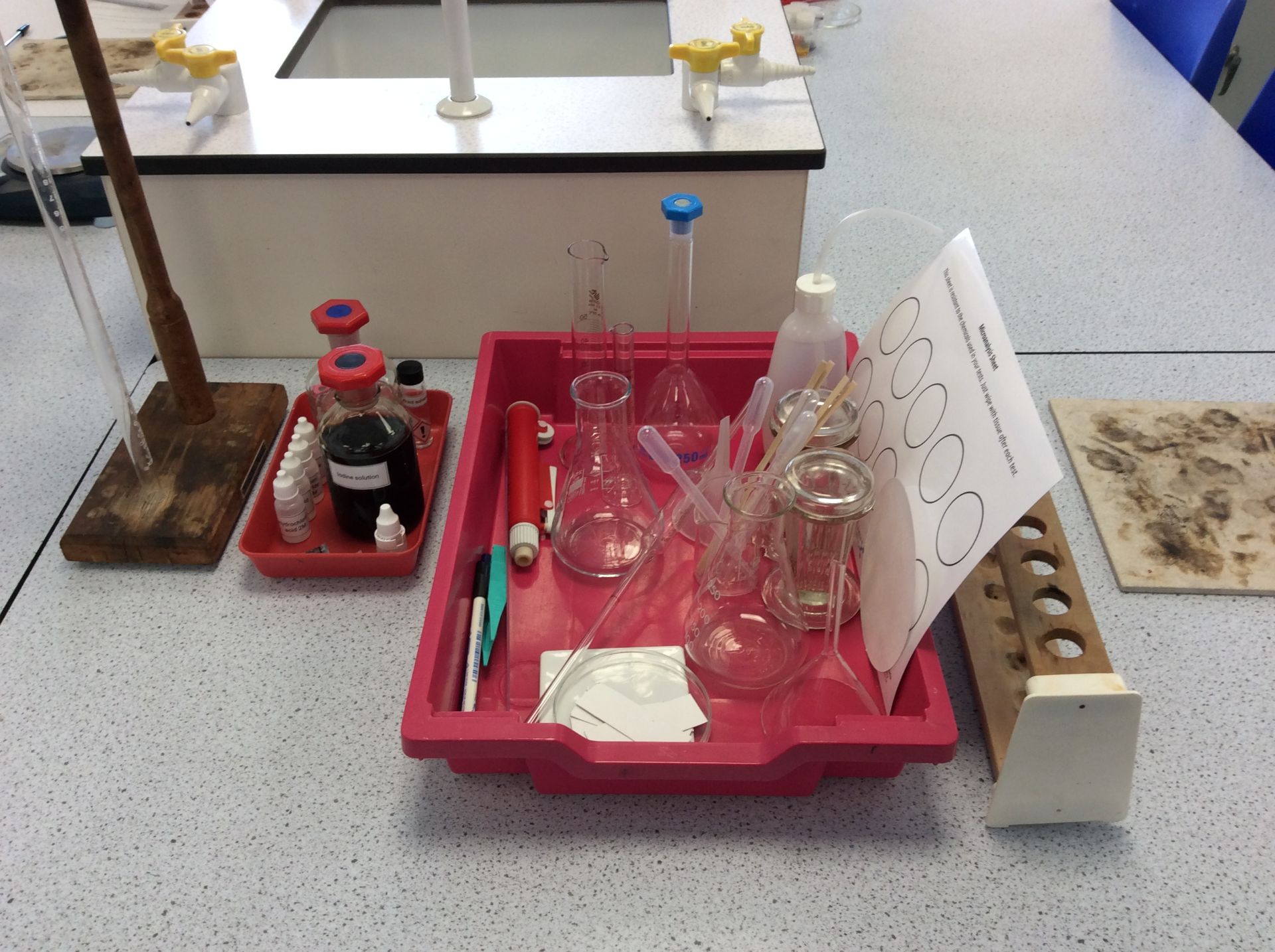
Above: The tray of equipment each team was provided with at the start of the session
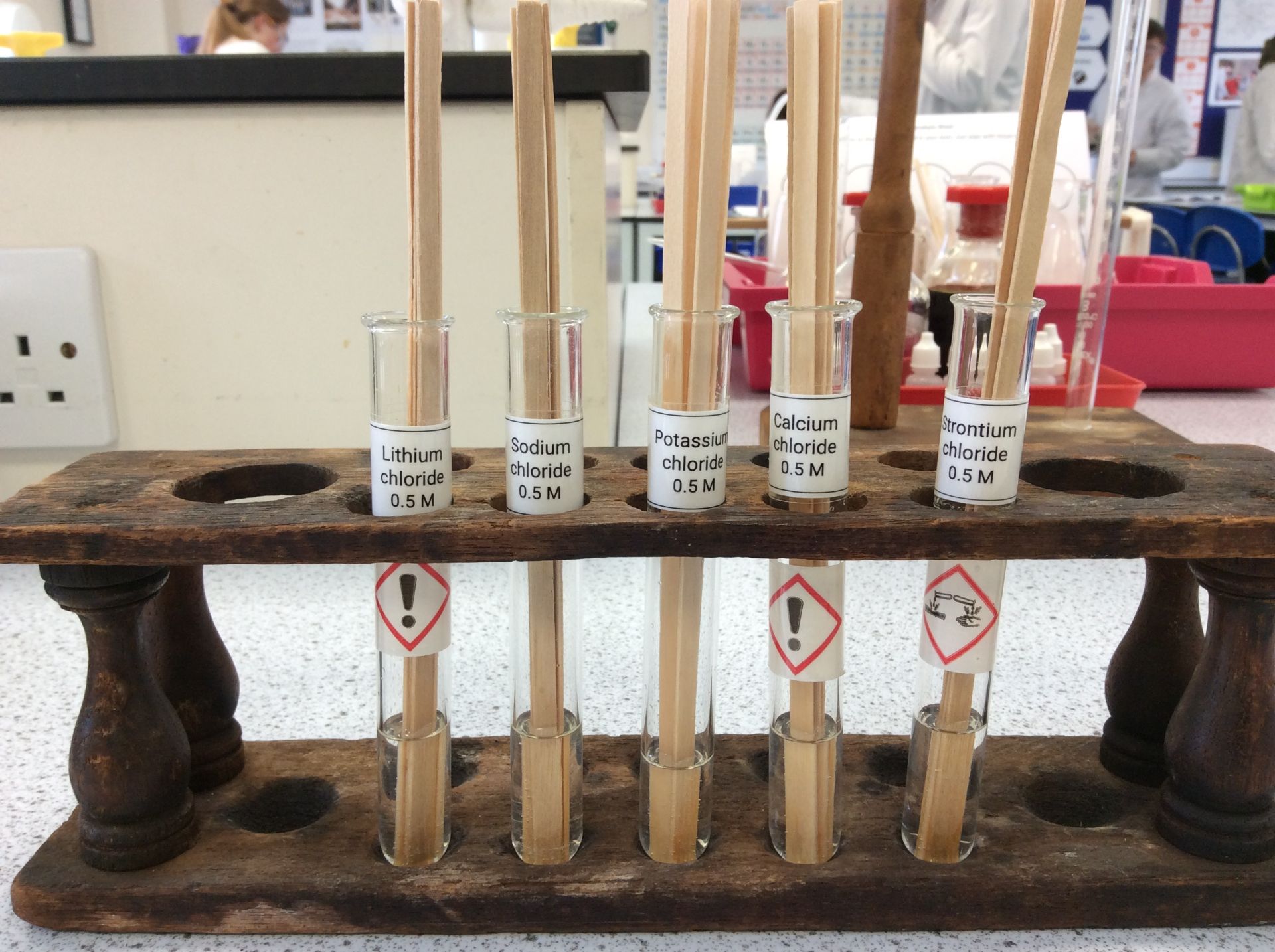
Above: These splints were pre-soaked in known solutions for two hours, so the flame test could be compared with the unknown soil sample for the presence of metal ions.
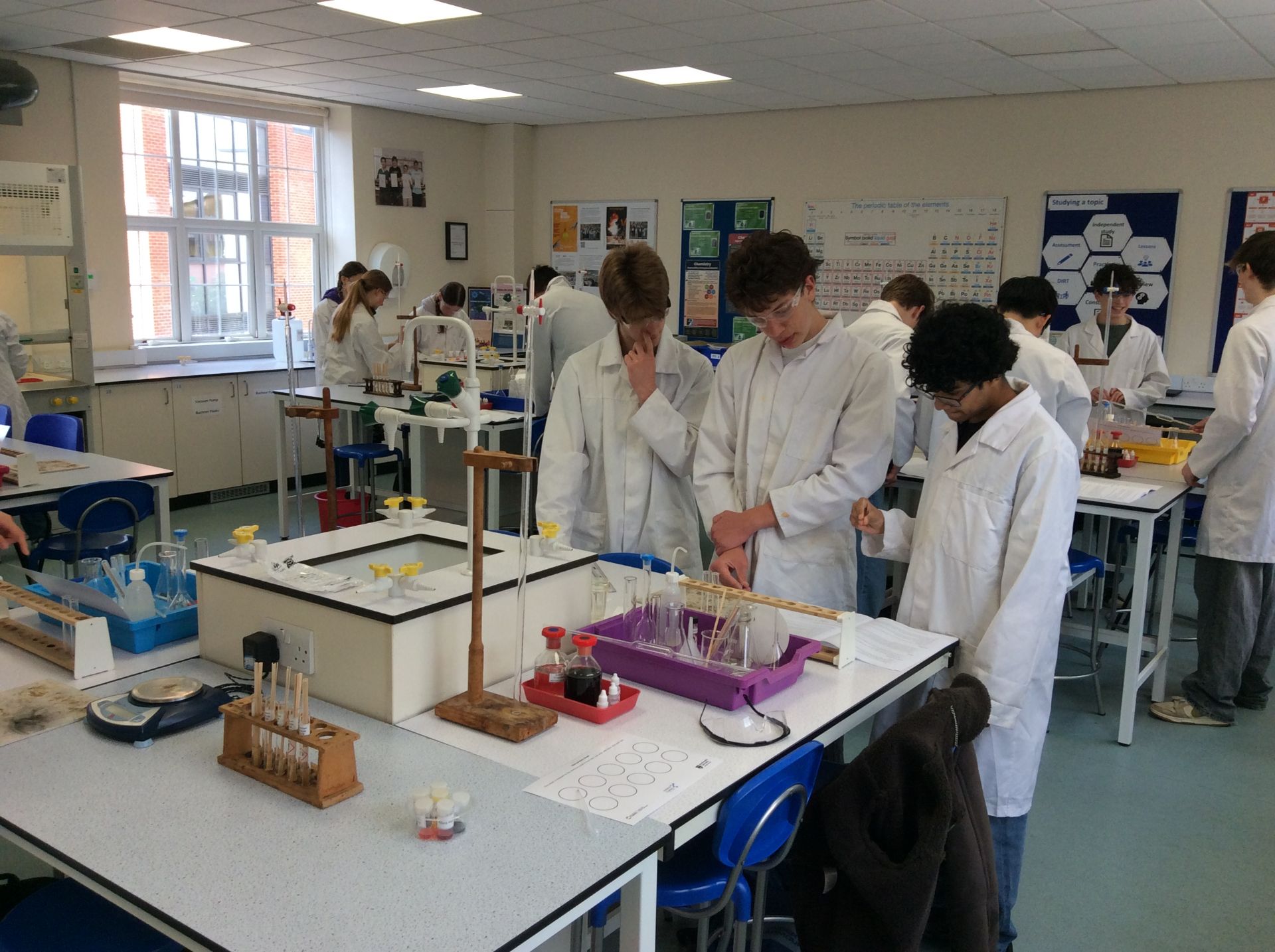
Above: The teams get going at the start of the session!
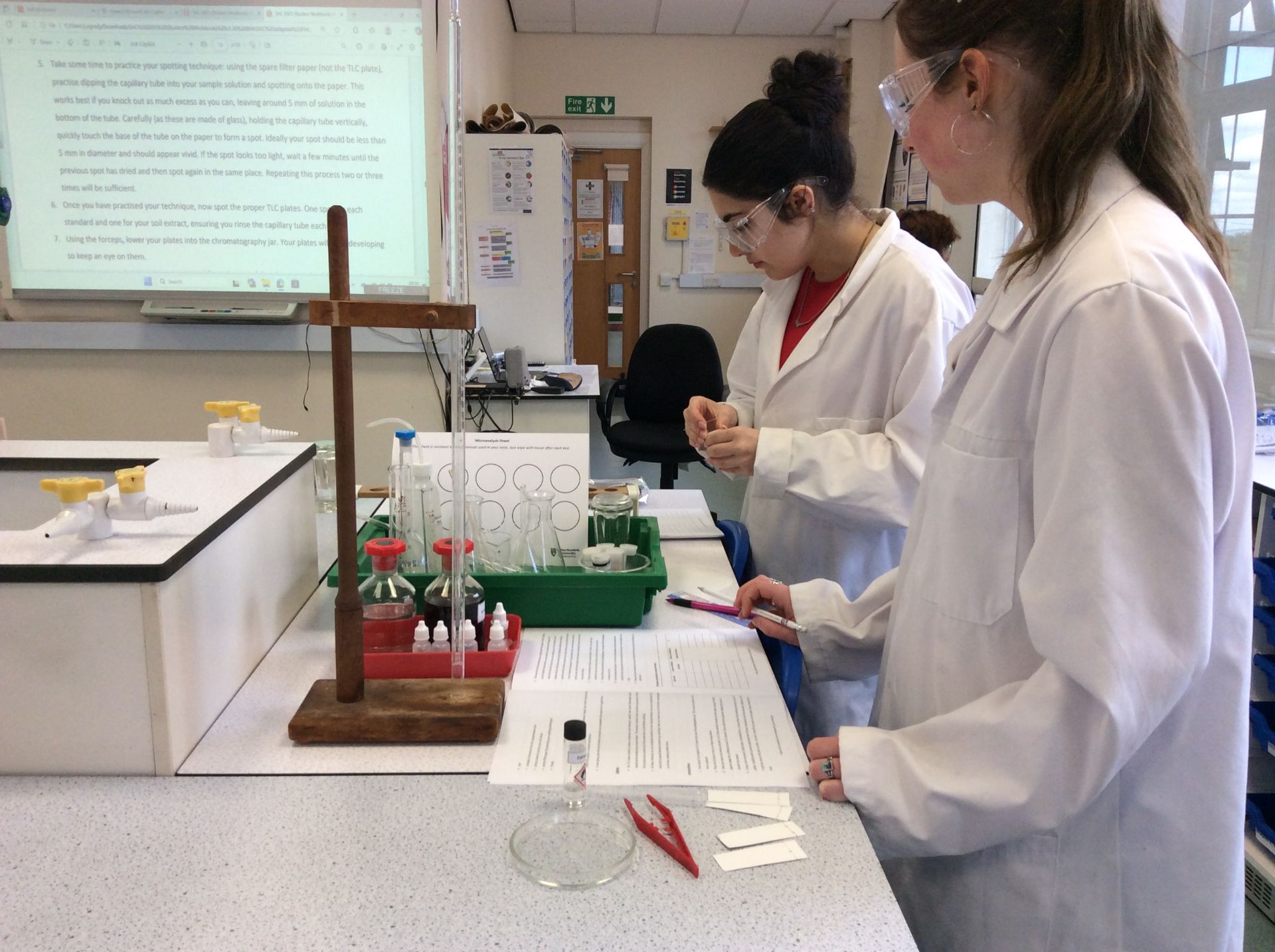
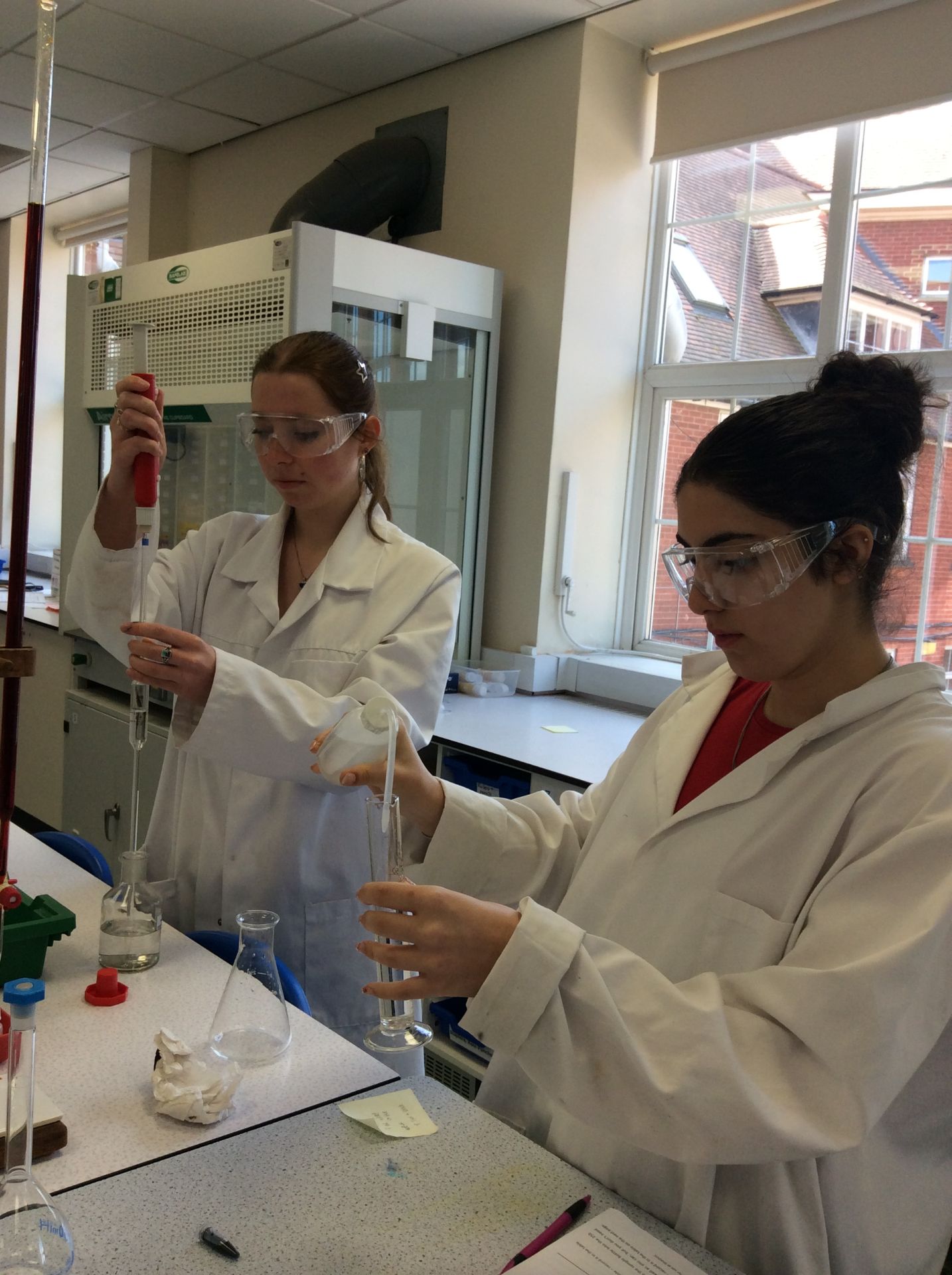
Above: Lily and Hastie set up their titration (left) and carry it out (right)
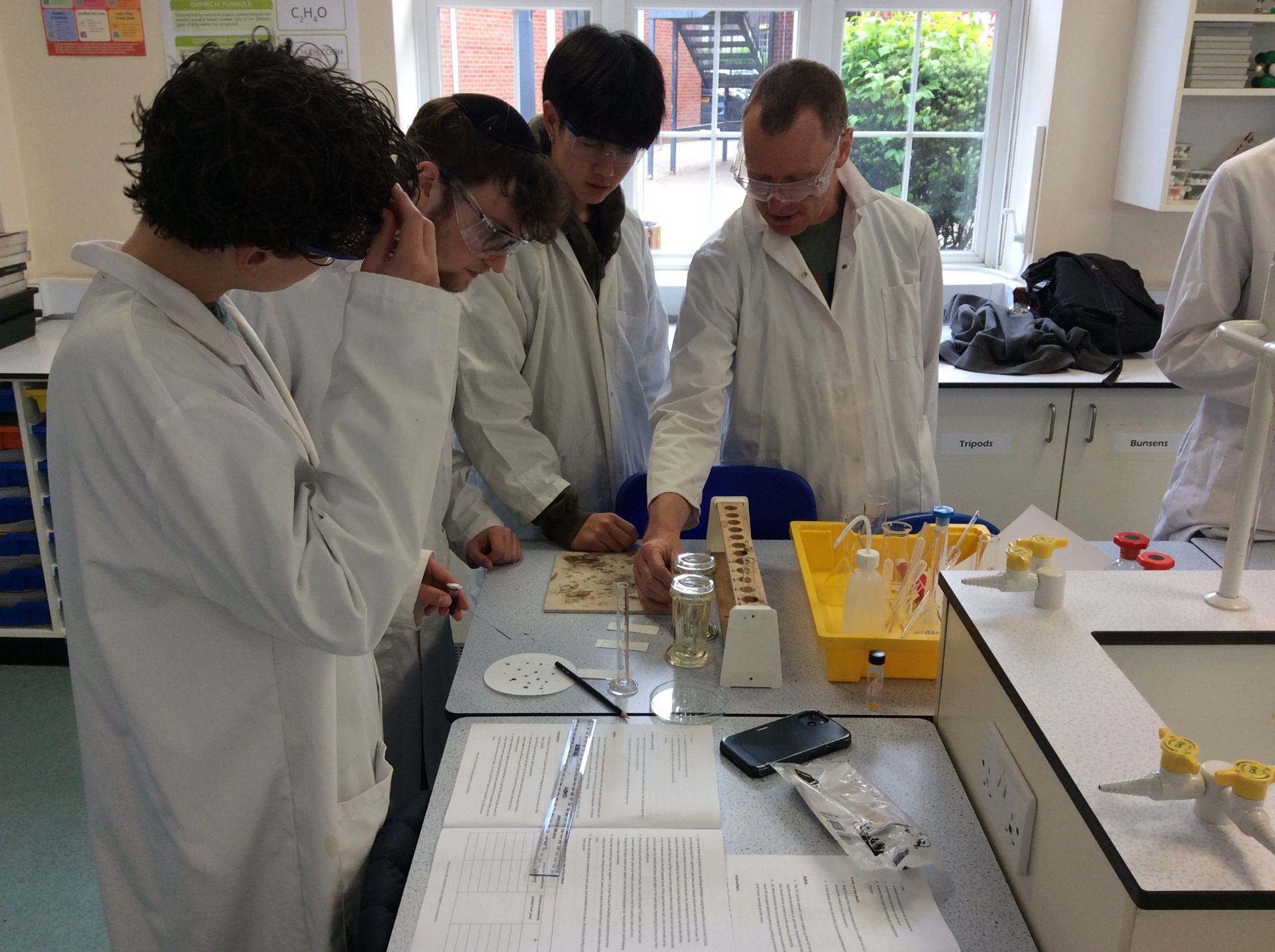
Above: Eli, Zack and Ian check some points with me on Thin Layer Chromatography
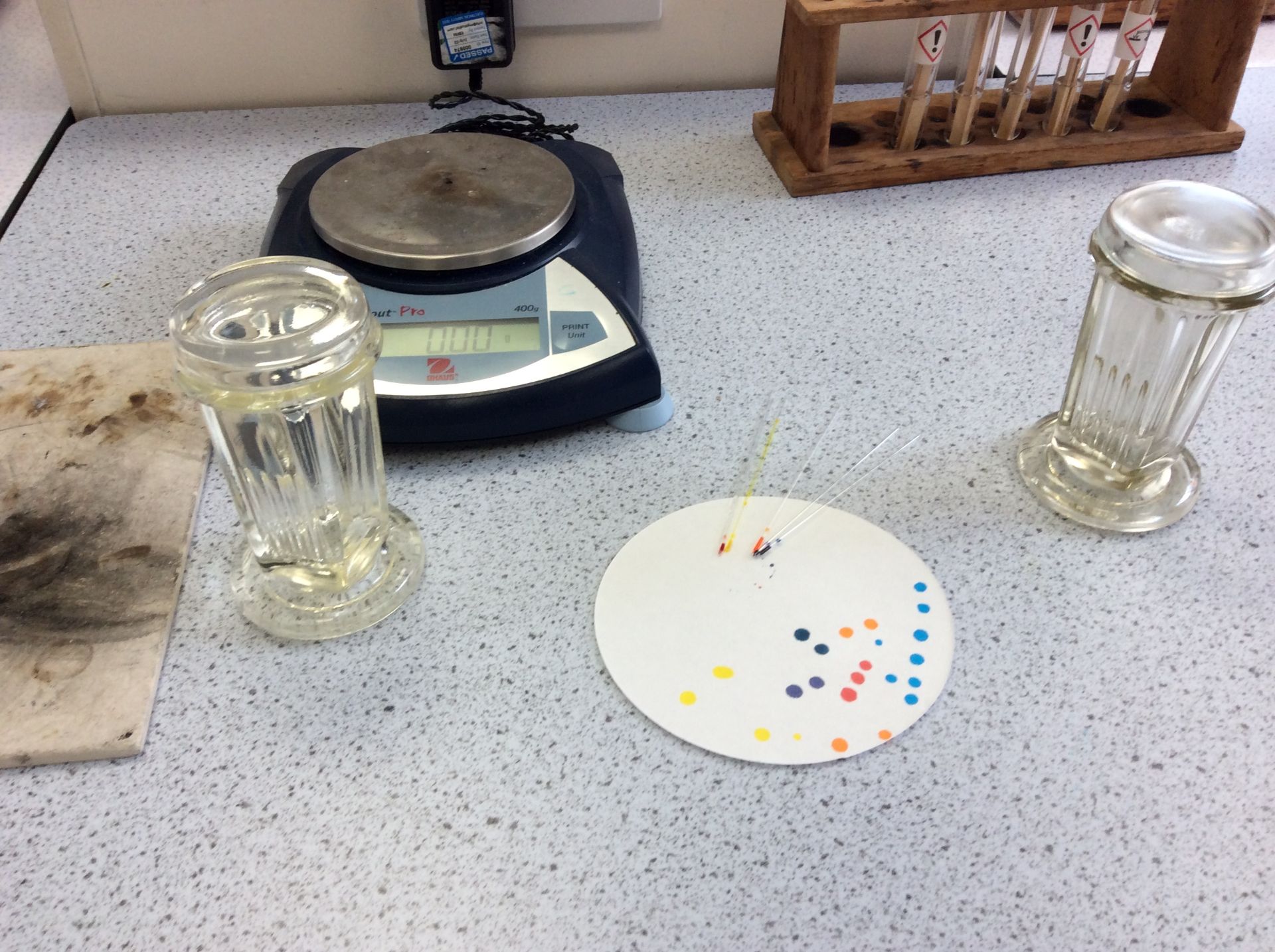
Above: Colours that the dyes present in the sample will show on the TLC chromatogram.
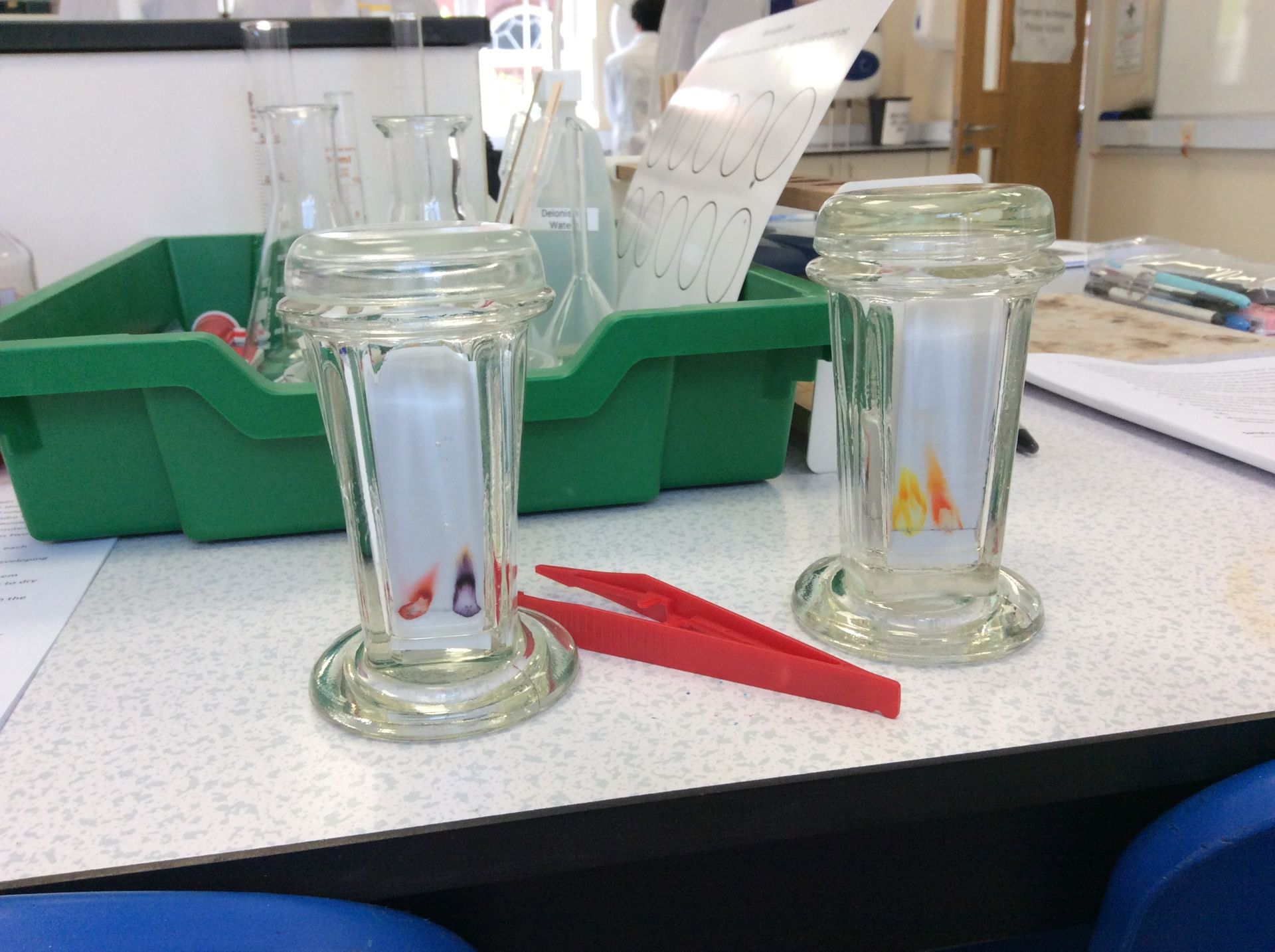
Above: Finished chromatogram showing how far each dye has travelled up the TLC plate
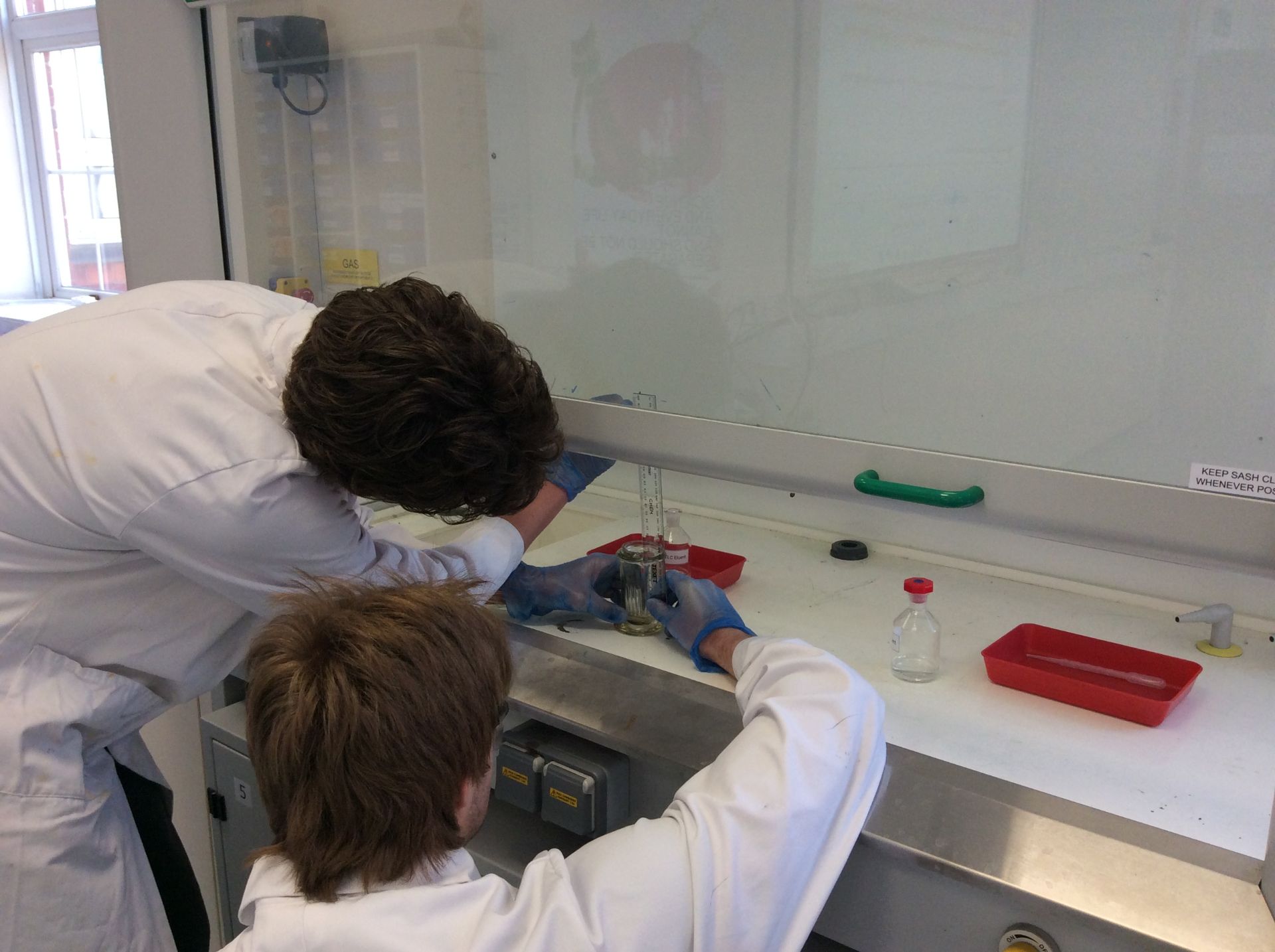
Above: Ammaar and David check the mobile phase (solvent) on their chromatogram
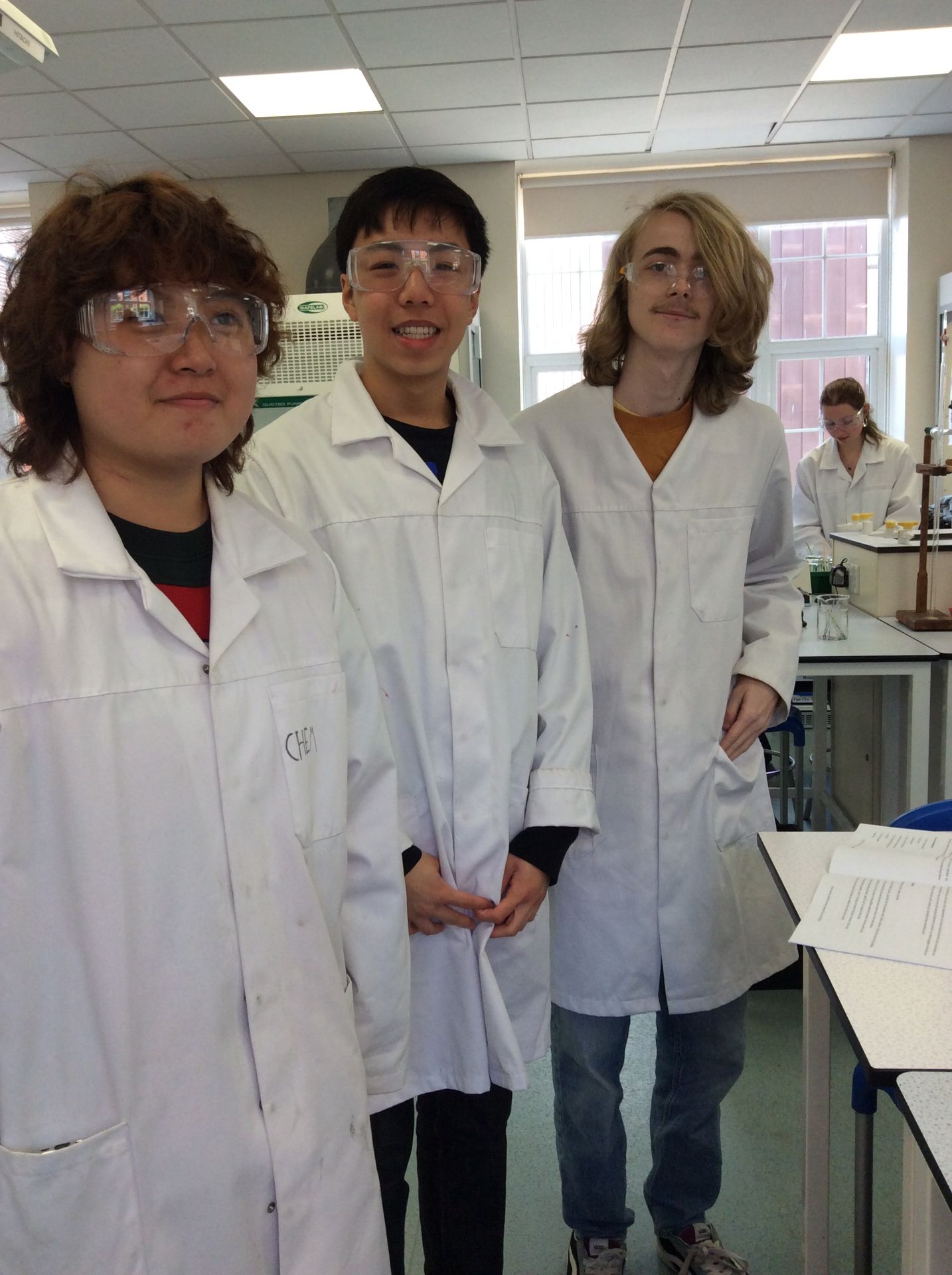
Happy chemists! (L-R) Hana, Bryan and Jacob
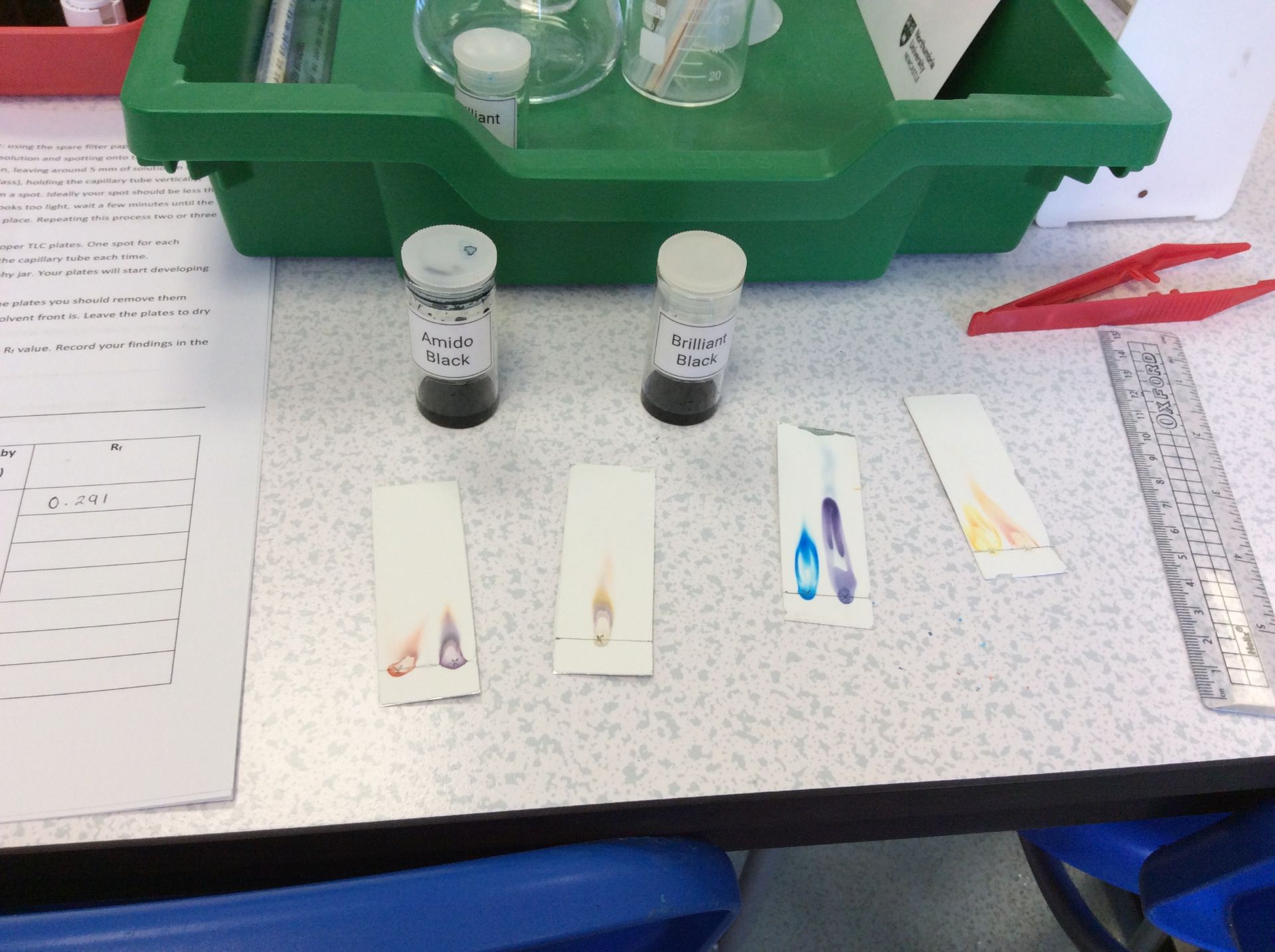
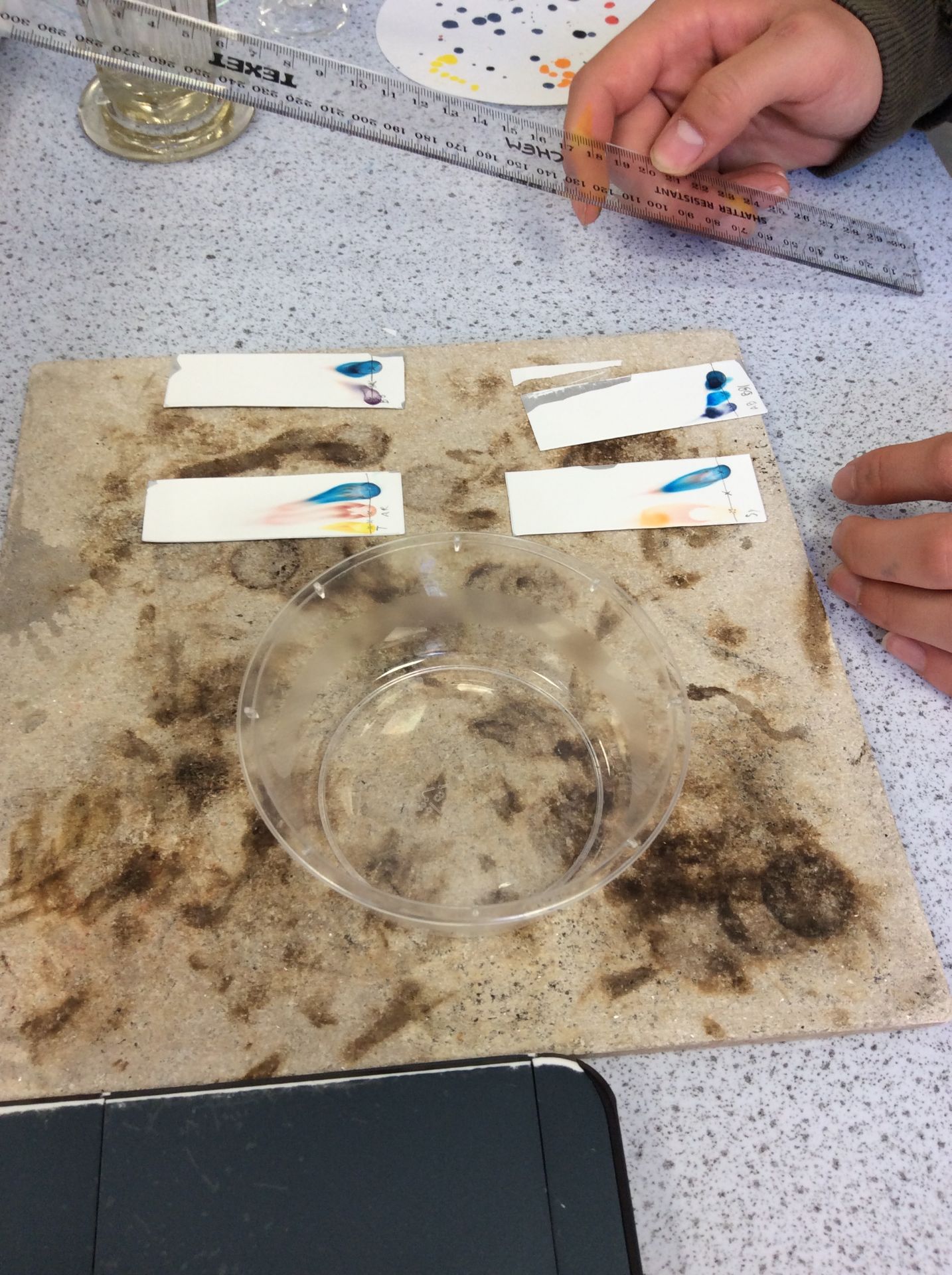
Above: Measuring the Rf values of the dyes in the unknown sample, compared to those in the known dye samples provided
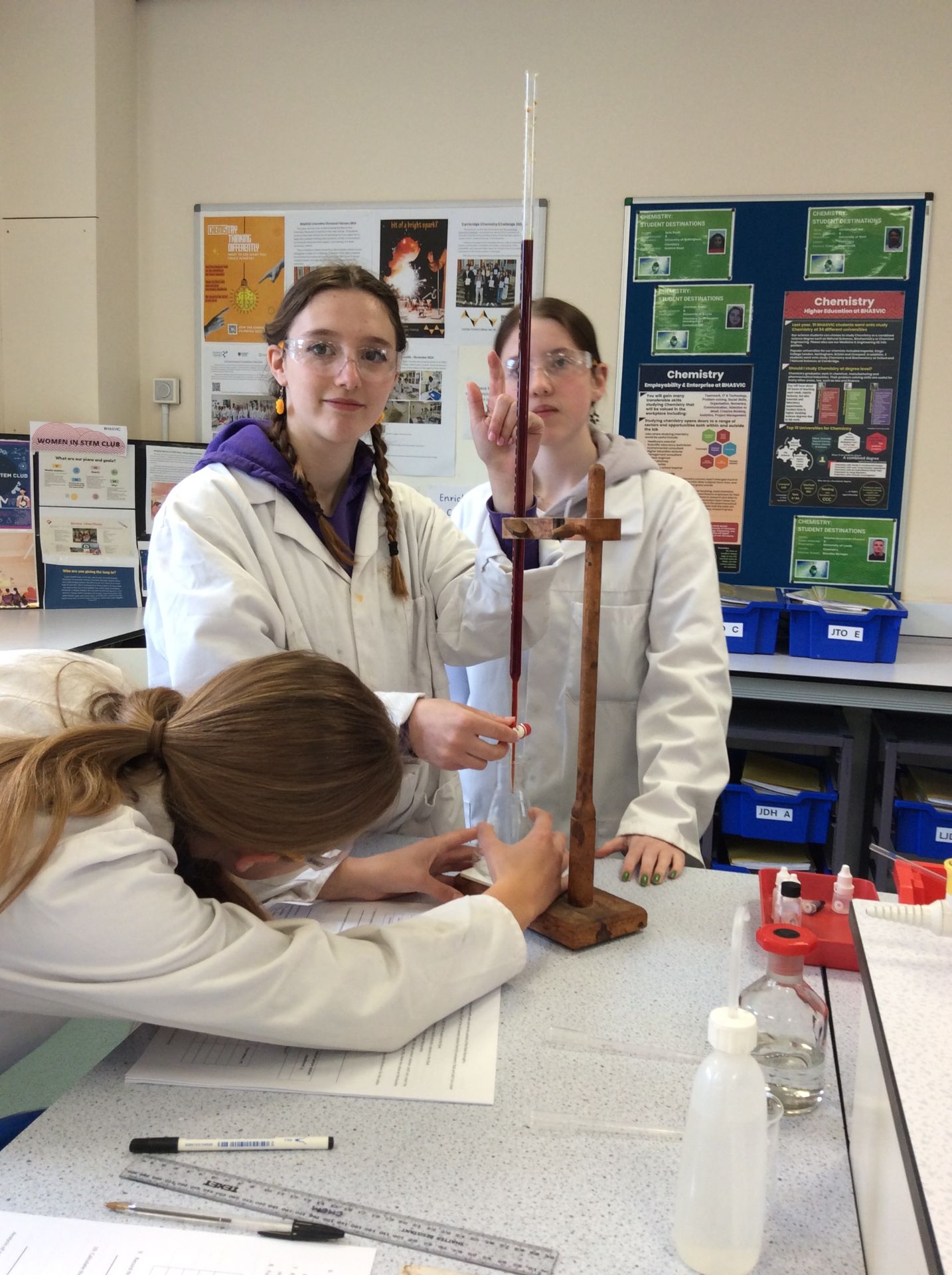
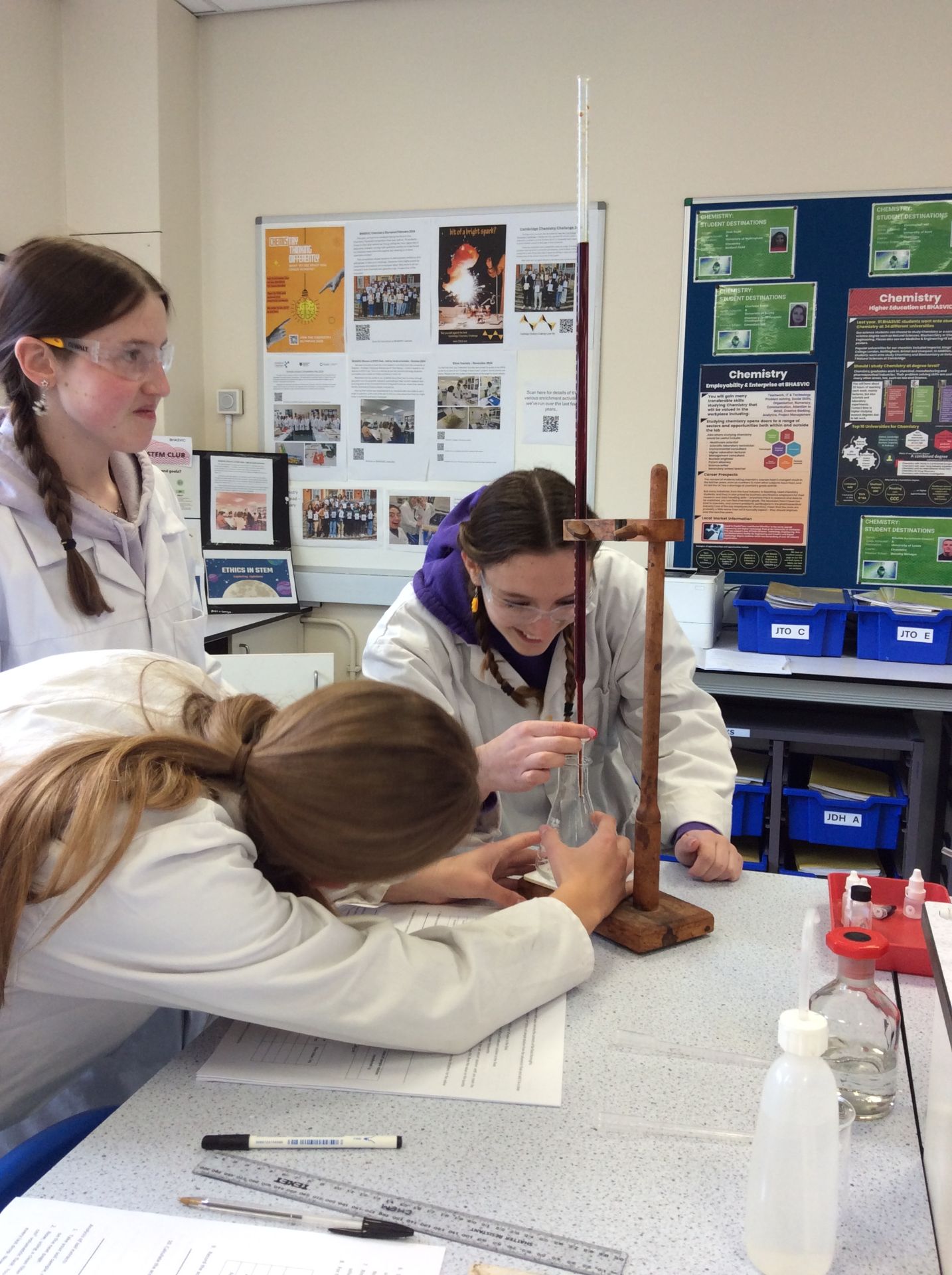
Above: Eden, Lucy and Amelie plan and execute their titration!
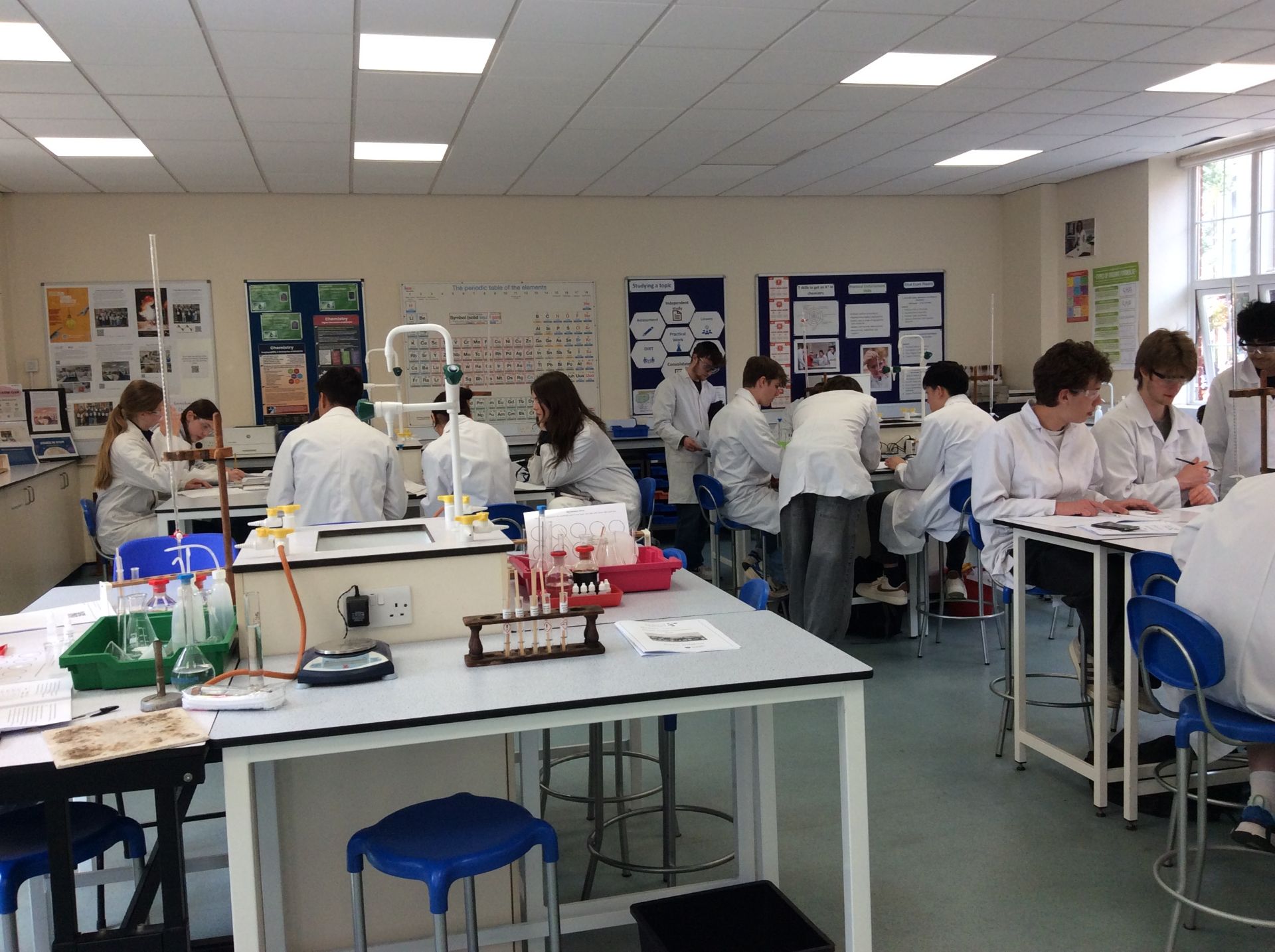
Above: The teams get stuck in to the analysis of their results before uploading them.
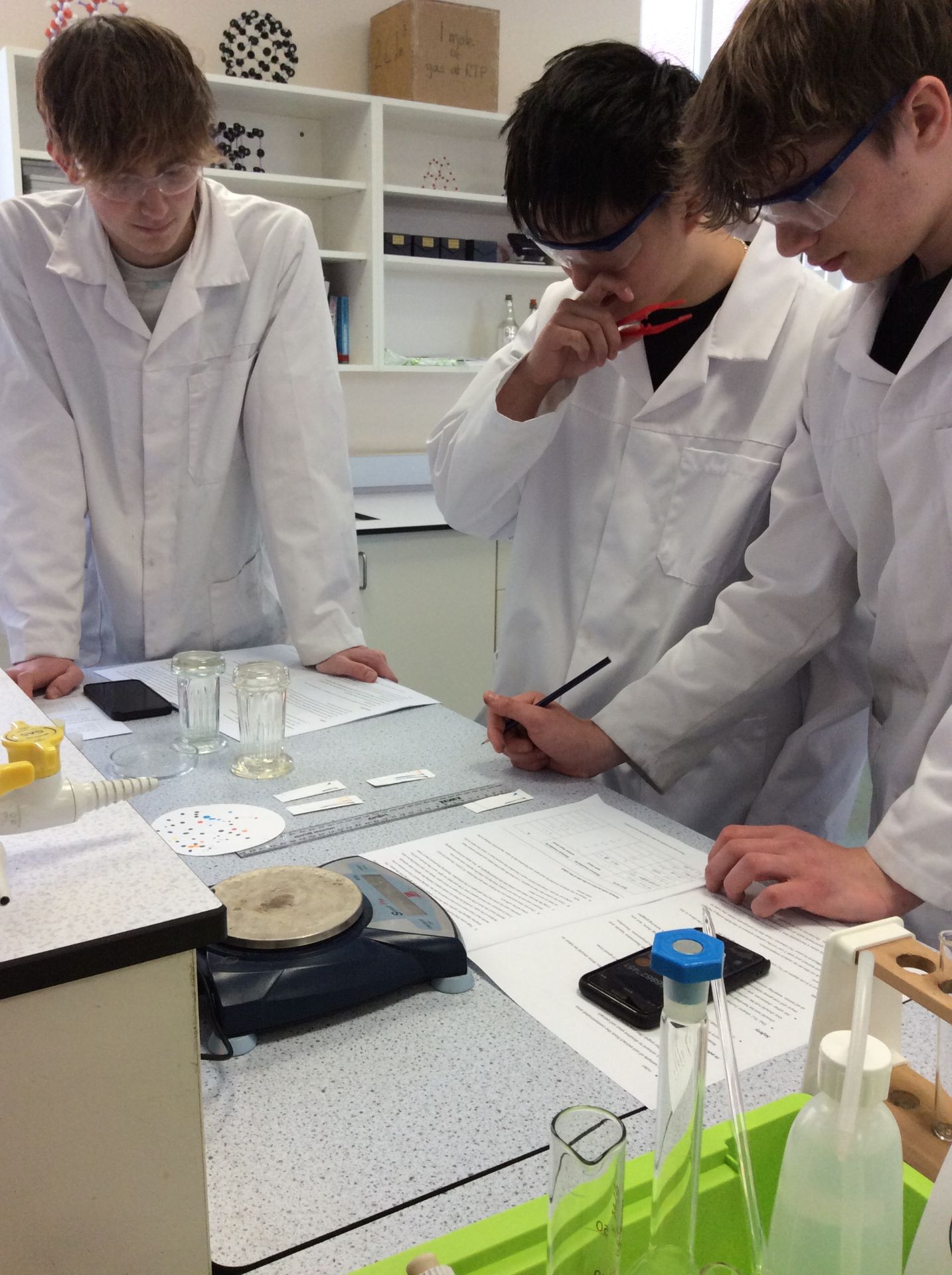
Above: Winning BHASVIC team Teddy, Ryan and Max plan out their approach to the chromatography.
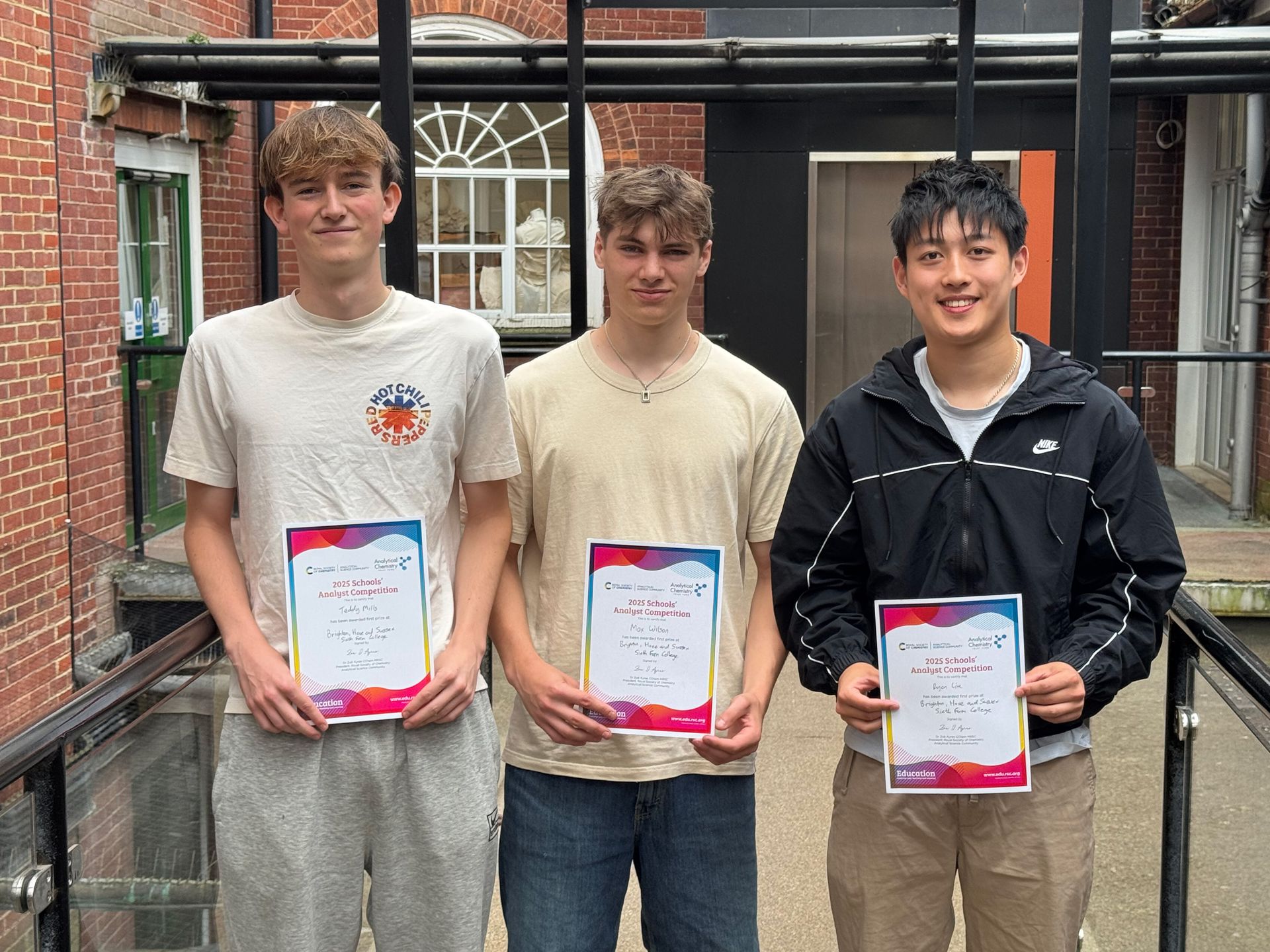
Above: (L-R) Teddy, Max and Ryan with their winners’ certificates!
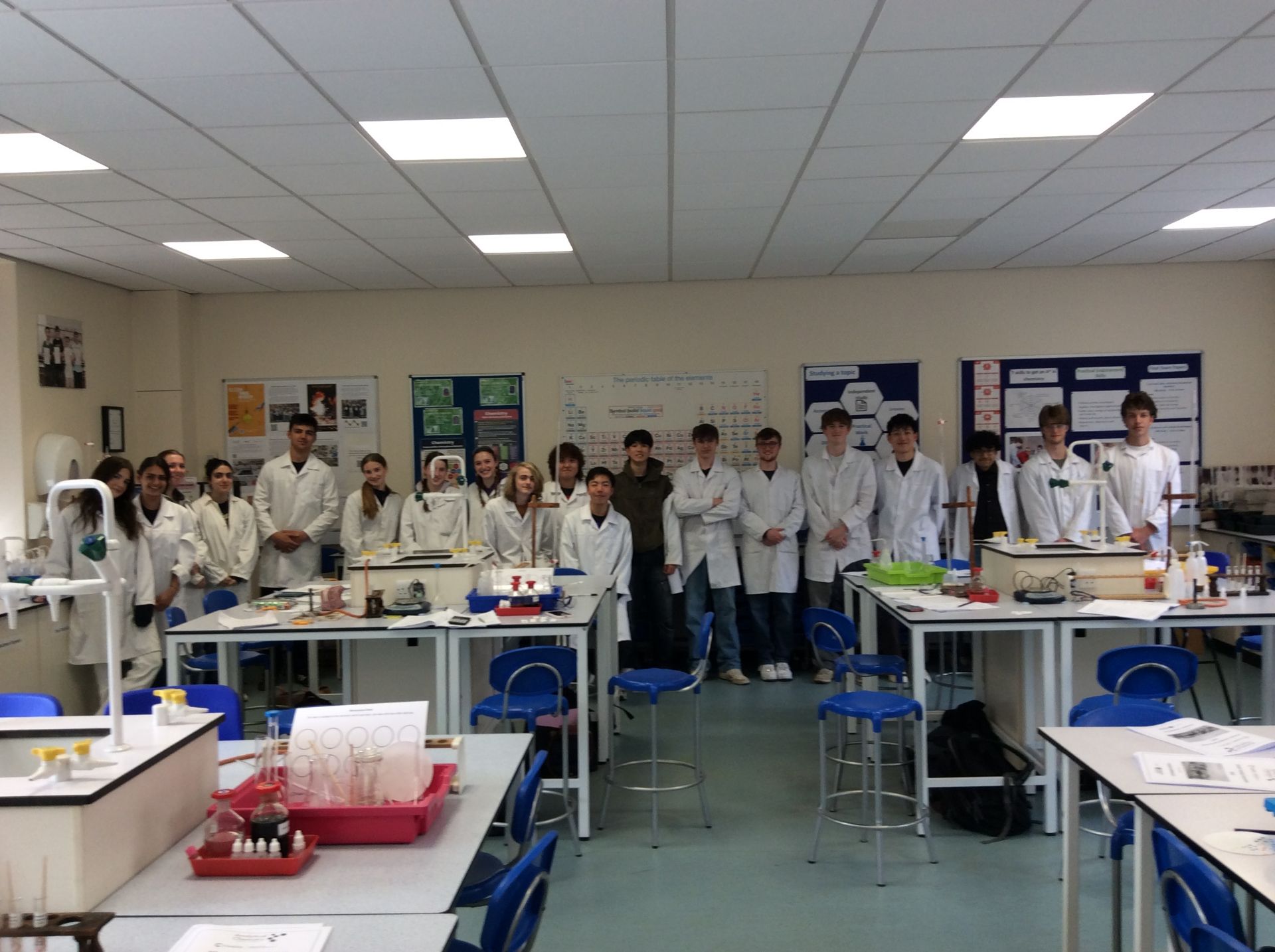
Above: All the BHASVIC teams together!